
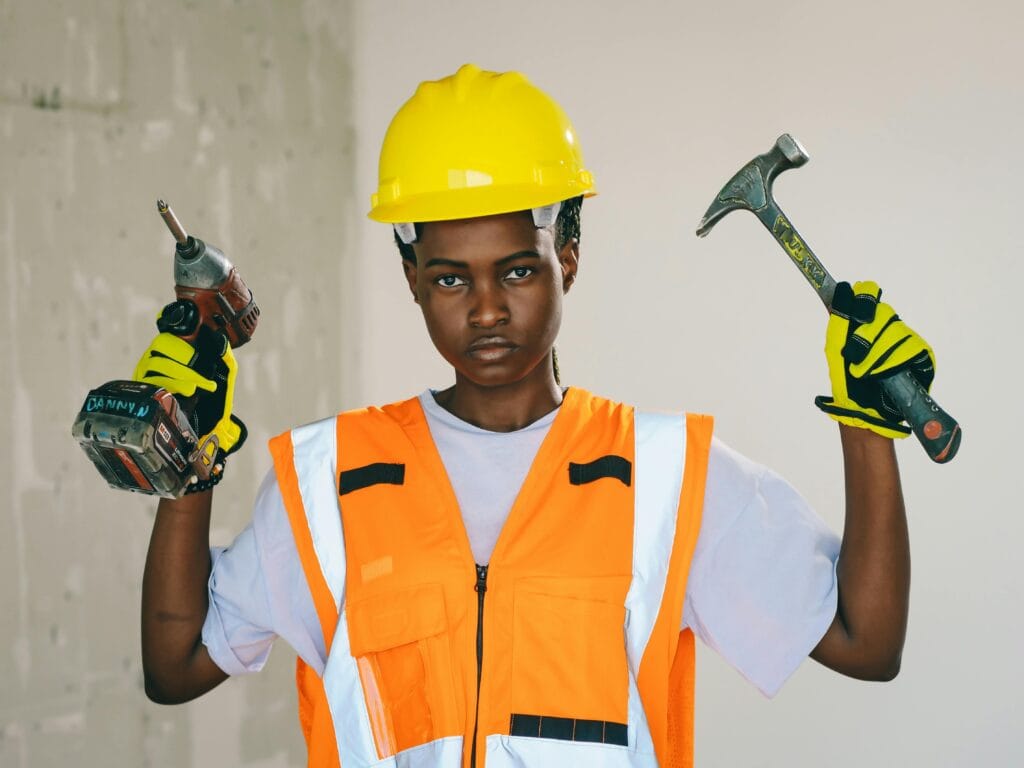
With AI transforming industries globally, many South African students are worried about their future careers. Jobs are scarce, and university fees are rising, leaving thousands uncertain about which path will guarantee employment. Amid this, trades and certain professional careers remain AI-proof — and they could offer life-changing opportunities.
According to the CEO of NVEVIA: “Careers like electrical engineering, plumbing, and other skilled trades are unlikely to be affected by AI. These jobs require hands-on skills, human judgement, and creativity — qualities machines cannot replicate.”
South African Job Outlook 2026 and Beyond
As artificial intelligence continues to shape industries around the world, South Africa faces both challenges and exciting new opportunities. Experts predict that the demand for skilled workers in areas such as construction, healthcare, renewable energy, and digital repair will rise sharply by 2026. Government projects focusing on infrastructure and green energy will require thousands of trained artisans, electricians, welders, and healthcare technicians.
In this new economy, jobs that involve human creativity, empathy, and technical hands-on skill will remain essential. As the NVEVIA CEO mentioned, “Technology will enhance, not erase, human capability.” This outlook means that students who focus on practical and people-centred skills today are preparing themselves for stable, well-paying careers in the near future.
Why These Jobs Are Safe from AI
AI is powerful, but it can only do what it’s programmed to do. It can’t climb a ladder to fix a circuit, feel compassion for a patient, or explain a math concept to a struggling learner. These tasks rely on human understanding, adaptability, and emotional intelligence — skills that machines can’t truly replace.
For instance, while AI can assist with diagnosing problems, it’s the electrician’s or technician’s experience that ensures safety and precision. In education, teachers use AI tools to make lessons better, but it’s their human touch that motivates and connects with learners. The same goes for healthcare workers, artisans, and engineers who must think critically and respond to unpredictable situations — something only humans can do.
How to Get Started in an AI-Safe Career
If you’re a student wondering where to begin, start by identifying your interests and strengths. Do you enjoy working with your hands, solving problems, or helping others? South Africa’s TVET colleges offer practical, affordable training in high-demand fields like plumbing, electrical work, IT networking, and mechanical engineering.
For those who prefer university studies, consider courses in education, nursing, or engineering — careers that blend technology with human expertise. Many bursaries and learnerships are available to help students cover tuition and gain experience while studying. By combining education, practical training, and curiosity, you can build a career that thrives in the age of AI instead of competing with it.
Key Takeaways
- AI is transforming work, but human skills remain essential.
- Trades, healthcare, and education jobs are safe and pay well.
- TVET and university qualifications both open doors to stable careers.
- South Africa’s skills shortage means high demand for qualified workers.
- Students who learn practical, people-focused skills are future-ready.
Why South Africa Needs These Careers
South Africa is facing a growing skills shortage. While many students chase university degrees, technical fields and trades are often overlooked — even though the country desperately needs electricians, plumbers, engineers, and healthcare professionals. Choosing these careers is not “lesser” — it’s smart, practical, and future-proof.
AI-Proof Careers That Can Change Lives
Here’s a quick look at some of the most in-demand and AI-safe careers in South Africa — including how much they pay and where you can study for them:
| Career | Why It’s Safe from AI | Average Monthly Salary (ZAR) | Where to Study |
|---|---|---|---|
| Electrician / Plumber | Requires hands-on work, troubleshooting, and physical skills AI can’t perform. | R15 000 – R35 000 | TVET Colleges, Learnerships, Apprenticeships |
| Engineer (Civil, Electrical, Mechanical) | Combines human judgement and complex real-world decision-making. | R25 000 – R60 000+ | Universities (UCT, Wits, UKZN, TUT, UJ) |
| Healthcare Professional | Requires empathy, judgement, and patient care — qualities AI can’t replicate. | R20 000 – R70 000+ | Universities (UP, UKZN, WSU, SMU, UFS) |
| Teacher / Lecturer | Involves human connection, mentoring, and communication. | R15 000 – R45 000 | Universities, UNISA, TVET Colleges |
| Skilled Artisan (Welder, Carpenter, Mechanic) | Manual, creative work that needs physical precision and problem-solving. | R10 000 – R30 000+ | TVET Colleges, SETA Learnerships |
| Creative Professional (Writer, Designer, Musician) | Relies on originality, cultural insight, and emotional creativity. | R12 000 – R40 000+ | Universities, Private Design Schools, Self-Taught |
1. Electricians and Plumbers ⚡🚿
Infrastructure development and maintenance are vital in South Africa. Electricians and plumbers solve real-world problems every day — work AI cannot replicate. With proper training, these trades can earn between R15 000 and R35 000 per month and offer opportunities to start your own business.
“After studying Electrical Engineering at a TVET college, I opened my own small electrical business. People said trades don’t pay, but now I earn more than I ever imagined. AI can’t replace what I do with my hands.”
– Thabo M., Johannesburg
2. Engineers 🏗️
Civil, electrical, and mechanical engineers are in high demand. AI can assist with designs, but the execution and real-world problem-solving remain human tasks. Entry-level engineers earn around R25 000 per month, while experienced engineers can make over R60 000.
3. Healthcare Professionals 👩⚕️
Doctors, nurses, and paramedics provide empathy, judgement, and care — skills AI can’t replace. South Africa’s healthcare system continues to grow, ensuring these careers remain in high demand and financially stable.
“Studying to become a nurse wasn’t easy, but it’s one of the most fulfilling careers. No machine can comfort a patient or hold their hand. That’s what makes us human — and that’s our power.”
– Zanele K., Durban
4. Teachers and Lecturers 📚
Teaching is more than delivering information; it requires patience, mentorship, and personal connection. AI cannot replace human educators who guide the next generation, especially in rural and underserved areas.
“I always thought being a teacher wasn’t special, but now I see how valuable it is. AI can teach facts, but it can’t care about a student’s future. Teaching is more powerful than ever.”
– Lerato D., Bloemfontein
5. Skilled Artisans and Tradespeople 🛠️
Carpenters, welders, masons, and other artisans are critical to South Africa’s development. TVET colleges provide practical training for these roles, but many students avoid them because of stigma. In reality, skilled trades offer high demand, job security, and opportunities to run your own business.
Why These Careers Are Future-Proof
- They require hands-on skills and physical presence.
- They rely on human judgement, creativity, and problem-solving.
- They involve empathy, trust, and human interaction.
- They are directly tied to essential services in society.
How to Take Advantage of These Opportunities
South African students can future-proof their careers by considering:
- Enrolling in TVET colleges for skilled trades like plumbing, electrical, or mechanical work.
- Pursuing engineering or healthcare degrees at universities with bursary and funding options.
- Developing soft skills — communication, problem-solving, and teamwork — which AI cannot replicate.
- Looking for bursaries and learnership programs that support technical careers. EduFunds provides resources and guidance for these paths.
Final Thoughts 💡
While AI continues to disrupt traditional office and administrative jobs, skilled trades and certain professional careers remain safe. By choosing paths like electrical engineering, plumbing, healthcare, or teaching, students are not only securing employment — they are choosing careers that can change their lives in today’s rapidly evolving job market.
As the NVEVIA CEO emphasized, “Jobs that require human skills, judgement, and creativity will always have a place — and in South Africa, these careers are more important than ever.”
Frequently Asked Questions (FAQ)
1. Which jobs are safe from AI in South Africa?
Jobs that require human judgement, creativity, or physical skill are safest from AI. These include electricians, plumbers, teachers, healthcare workers, engineers, and artisans. They involve real-world problem-solving that machines can’t replicate.
2. Are TVET college courses worth it in today’s world?
Absolutely. TVET colleges teach practical skills that are highly demanded in South Africa’s economy — like welding, plumbing, and electrical work. These careers are not only safe from automation, but they also offer good pay and business opportunities.
3. How much can I earn as a tradesperson or technician?
Depending on experience and location, skilled tradespeople such as electricians, plumbers, or welders can earn between R15 000 and R35 000 per month. Experienced professionals or business owners can earn much more.
4. Can AI replace teachers or lecturers?
No. AI can assist with learning tools and online materials, but it cannot replace the empathy, understanding, and personal guidance that teachers provide. Education is one of the few fields where human connection remains essential.
5. What degrees or qualifications should I choose to stay future-proof?
Focus on qualifications that combine technology with human skills. Fields like engineering, healthcare, education, and technical trades are great choices. These careers depend on creativity, emotional intelligence, and real-world experience — areas where AI struggles.
6. Are AI-safe jobs still in demand in South Africa?
Yes. Trades and technical professions like electricians, plumbers, healthcare workers, and teachers are in constant demand. South Africa’s growing infrastructure and skills shortage make these careers even more valuable in the AI era.
7. How long does it take to qualify for a skilled trade?
Most TVET trade programmes take between 12 and 24 months to complete, depending on the qualification level. After training, you can gain experience through apprenticeships or learnerships to become a qualified artisan.
8. Can AI help people in trades and technical careers?
Yes. While AI can’t replace these jobs, it can make them easier. For example, electricians and engineers can use AI tools for planning, safety checks, and problem diagnosis — improving productivity without taking away their roles.
9. What’s the difference between university and TVET studies?
Universities focus on theory and research, while TVET colleges teach hands-on, practical skills. Both are valuable, but in a time when AI is changing the job market, TVET qualifications can offer faster, employment-ready results.
10. Which skills should students develop to stay relevant in the AI era?
Students should focus on critical thinking, creativity, emotional intelligence, and communication. These soft skills — combined with technical knowledge — make you adaptable and valuable in any industry.
11. How can I find bursaries or funding for AI-safe careers?
You can explore bursaries and funding opportunities through EduFunds, which shares information about scholarships and learnerships for students studying in-demand and technical fields across South Africa.